


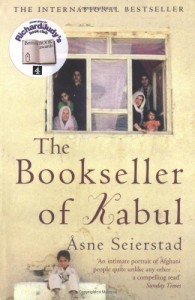
 What I liked about this book was that it observed and refrained from judging, as much as that is ever possible. We get various angles on the same person, in relation to different family members, which makes for a contradictory but truthful and rich picture. These are real people, not fictional characters, and their cruelty goes hand in hand with amazing sensibility, their narrow-mindedness is followed closely by their yearning for change. There is no happy-ending or resolution, not because the author is pessimistic, but simply because this is just how things turn out for this family. The chaos of life in Afghanistan is reflected in the chaos in individual lives, the rigidity and inability to step out of the crushing restrictions imposed by family, tradition, religion. And very often, when I found myself thinking "But why are they doing this, why can't they do otherwise?", I realised that the answer was simply: because this is how things are for them at that moment.
 I'm really at a loss as to what rating to give here, I admit I'm in two minds about this one. I loved the philosophical parts and the language is superb. On the other hand... Something about this book didn't quite click for me, it didn't move me properly. Perhaps I read it at the wrong time, who knows, maybe a reread under different circumstances will get a different reaction from me.
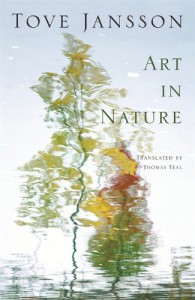 These stories, like all of Tove Jansson's writing, are so subtle and read so smoothly, that you can easily read the whole lot in one sitting. I had to make myself read one a day so that I didn't end up gliding on the surface. Jansson always amazes me with the way she offers a glimpse of a certain problem, a moment or a whole life - and that done almost dispassionately, with such precision. And yet her language is so rich and there is no lack of warmth in it, a combination that very few authors can achieve.
 One of my most favourite books of all time. Forget the crime-plot twist. The exploration of cultural displacement, belonging and connection make it an absolutely amazing study of life.
 A completely engrossing read. Each chapter deals with specific subjects from Montaigne's 'Essays' but it does so in the context of his life. Extremely well-written and yet achieves that rare feat of being accessible.
 A good book, no doubt, but nowhere near the level of Sarah Bakewell's 'How to Live'. Still, very readable and enjoyable.
Ние, врабчетата
Чела съм я толкова пъти и пак винаги хем ме разсмива, хем ми нагорчава на места, хем редовно ме кара да си мисля, че Радичков си е чисто и просто един гений.
Стихотворения, избрани фрагменти и преводи
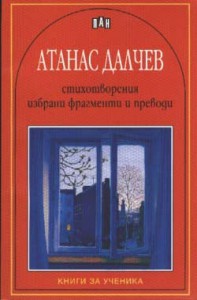 "Човек смята, че листата на дърветата са пожълтели от есента, и едва после, когато поразмисли, разбира, че огънят и страстите на лятото са направили това."
Фабрика за Абсолют
Very clever, very funny, very dark. I can hardly believe this was written all the way back in the 1920s. What happens - or rather - how people react when the pure substance of 'God', or the Absolute, appear in the world. Quite prophetic really (World War II and other wars of the last and our century)but almost a hundred years on it doesn't seem to me we have progressed that much from Capek's characters.
Автобиография
Not a big fan of autobiographies but this book is unmissable. I laughed when I read it as a child and even more when I reread it a year ago (admittedly, not at the same things).